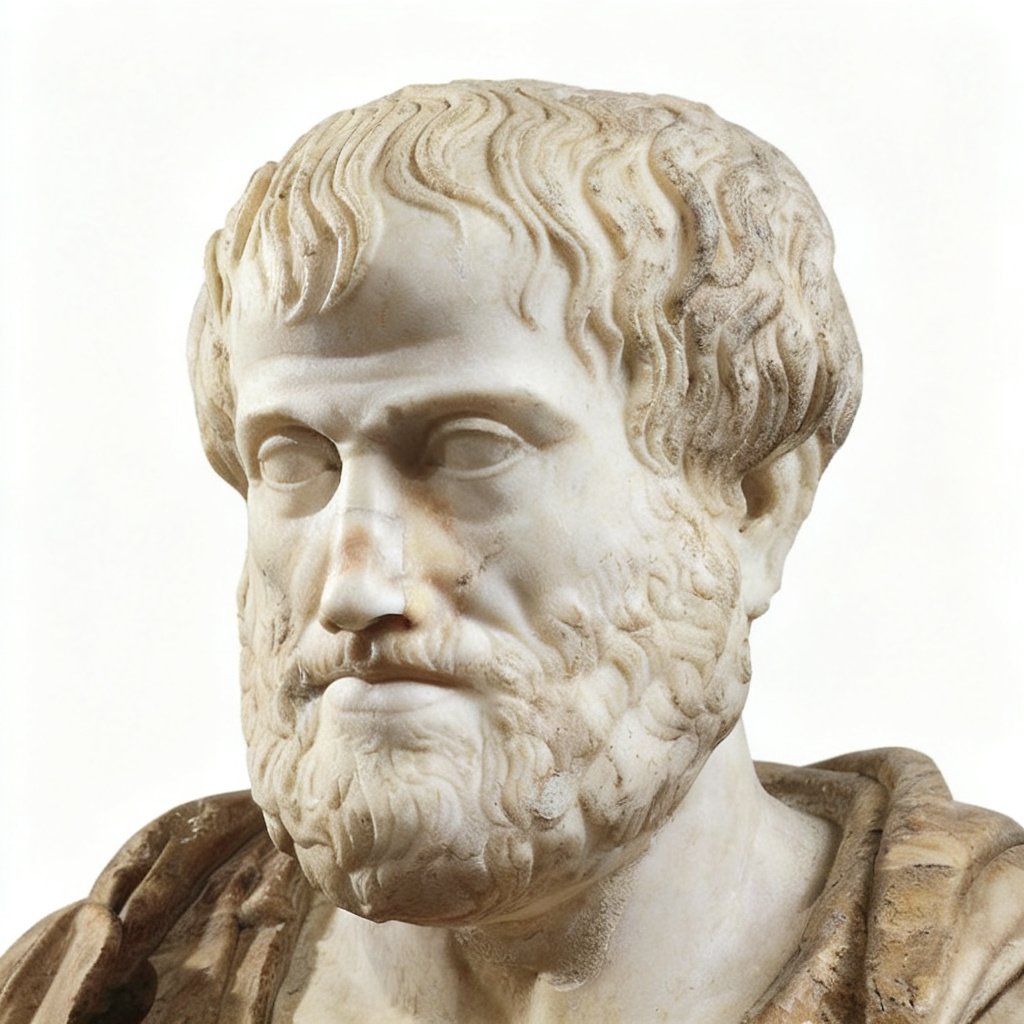
Aristotelian Thought
Why something rather than nothing?
Aristotelian metaphysics
Principle of Sufficient Reason — Everything that exists or happens has a reason or explanation for why it is so.
Note: This principle is often associated with classical rationalism, especially Leibniz
Why did it happen? → causal reason
Why is it true? → logical reason
Why does it have this property? → explanatory reason
Why does it exist? → metaphysical reason
Why this possibility rather than another? → reason for choice/contingency You can organize Aristotelian metaphysics around four major questions:
What is being? → Substance and accidents
How can things change? → Act and potency
Why do things exist/change? → Four causes
What is the ultimate explanation of change? → Unmoved Mover
In Aristotelian thought, categories of questions that explain “the why’s” of something that exists or changes in nature are examined in the four causes:
1) the material cause,
2) the formal cause,
3) the efficient cause,
and
4) the final cause.
Why something rather than nothing – can be argued by logic and reason. The premise is based on the efficient cause sequence that says:
1) a “contingent thing” is something that does not have to exist,
(It is contingent because it does not need to exist – but it does)
therefore if there is something that does exists – then:
2) all contingent things require an efficient cause
(there is an act that must brings it into existence)
since
3) nothing can be its own efficient cause
(the object can not create itself)
and
there are typically preliminary contingent precursors
(ingredients or materials or elements)
4) efficient causes exist in series – a chain of causality leads to the something existing
(however – a chain of causality can not regress to infinity).
So, for example:
A Chocolate cake sits on the kitchen table. The chocolate cake was baked by your mother. Your mother bought the ingredients at the store and mixed them in the kitchen. Each of the ingredients came from a farm.
4) The chain of causality is the process of gathering the ingredients and mom baking the cake.
3)The efficient cause was not that the cake made itself.
2)The contingent efficient cause is that – Mom decided to bake a cake
1) The mother and the ingredients had to already exist.
However, this chain cannot trace back to infinity – we can not continue to reverse the prerequisites past fundamental particles or we reach absurdity and the argument become null.
The sum of all efficient causes in the past leading up to the present does not create a starting point which created itself.
By logic and reason – there must be a first uncaused non contingent cause (starting point) – it exists according to its own nature as a necessary beginning. This is the raw definition of God. The burden of proof is to provide an example of something other than the principle of sufficient reason to explain reality.